

Kubex analyzes Kubernetes containers by combining machine learning, workload behavior analysis, and policy-driven optimization to determine the scientifically optimal CPU and memory settings for each workload. The platform continuously evaluates real container behavior over time and generates safe, explainable recommendations that reduce waste while maintaining application stability.
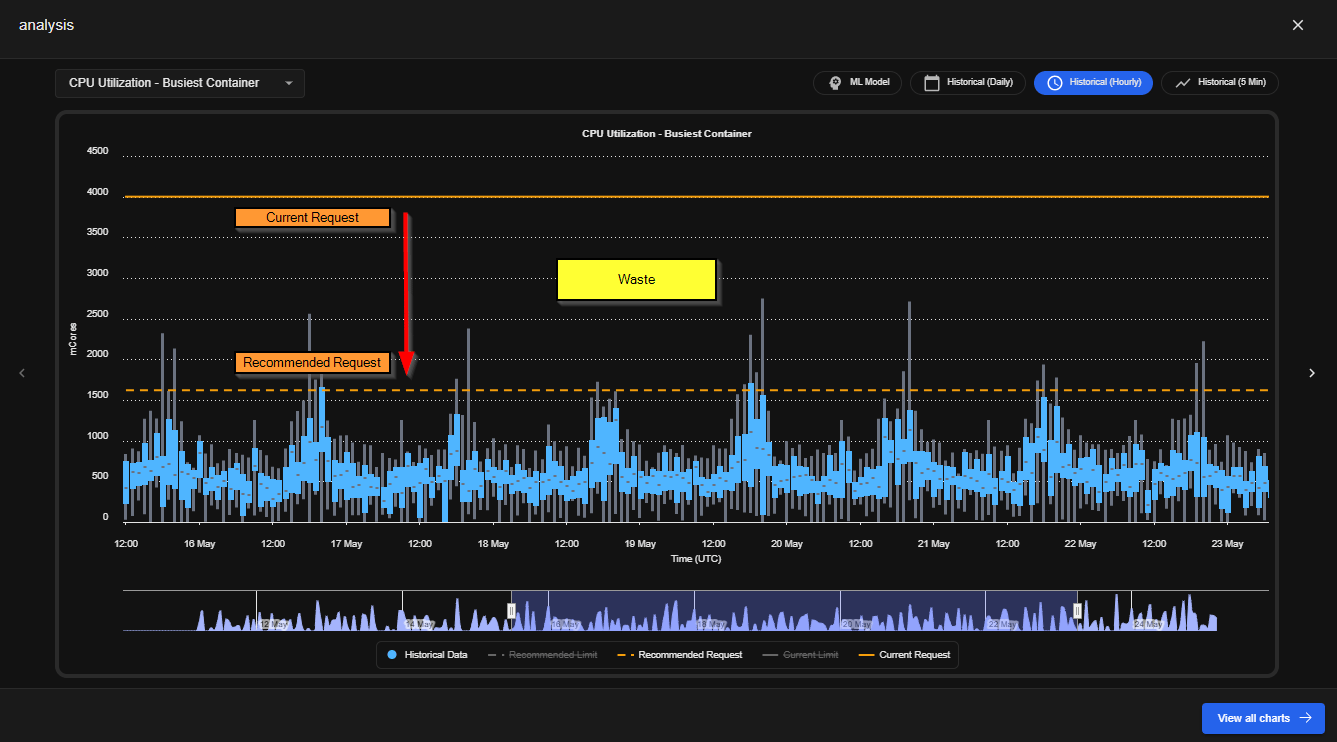
Figure: Example of Wasted CPU Resources
Container Optimization Workflow
1. Container Telemetry Collection
Kubex continuously collects raw operational data from Kubernetes containers, including:- CPU utilization
- Memory utilization
- Resource requests
- Resource limits
- Replica behavior
- Scaling activity
- OOM kill events
- Runtime utilization trends
2. Usage Pattern Analysis
Kubex applies machine learning models to identify workload behavior patterns over time. The analysis includes:Historical Resource Consumption
Evaluates:- Average utilization
- Peak utilization
- Sustained demand
- Burst patterns
- Idle periods
Temporal Workload Behavior
Analyzes:- Time-of-day usage
- Daily and weekly cycles
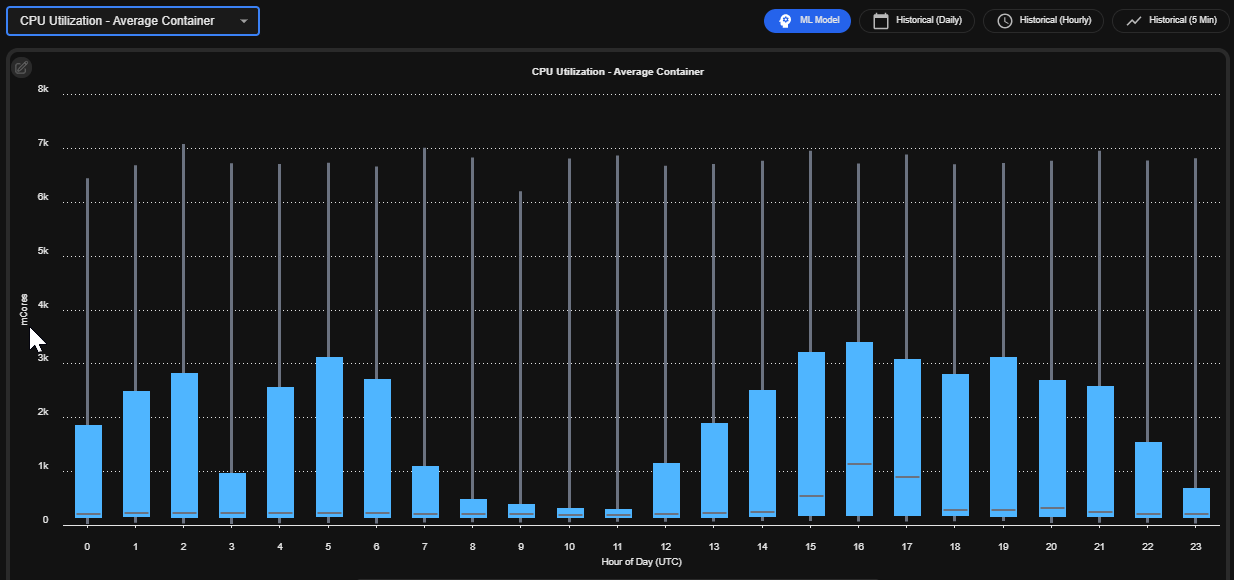
Figure: 24 hr ML model of usage patterns
3. Policy-Based Optimization
Kubex combines machine learning analysis with configurable operational policies. Policies allow teams to control:- Optimization aggressiveness
- Minimum headroom requirements
- Downsizing behavior
- Upsizing sensitivity
- Environment-specific standards
- Assignment of policies to clusters, namespace or label-based
4. Scientific Rightsizing Recommendations
Based on workload analysis and policy evaluation, Kubex generates optimized recommendations for:- CPU Limit & Request
- Memory Limit & Request
- Ephemeral Storage Limit & Request
- GPU fractional recommendations and optimal MIG profile. See GPU Optimization
- Eliminate wasted capacity
- Maintain workload stability
- Improve scheduler efficiency
- Reduce infrastructure cost